Cross-sell: one offer per call — why this isn't preference, it's data
In our product, cross-sell is a Growth+ feature. But regardless of plan, the 'one offer per call' rule is globally frozen. You can't disable it in the panel because second offer = -35% accept rate in data from 5 pilots. We show the data + how to configure properly.
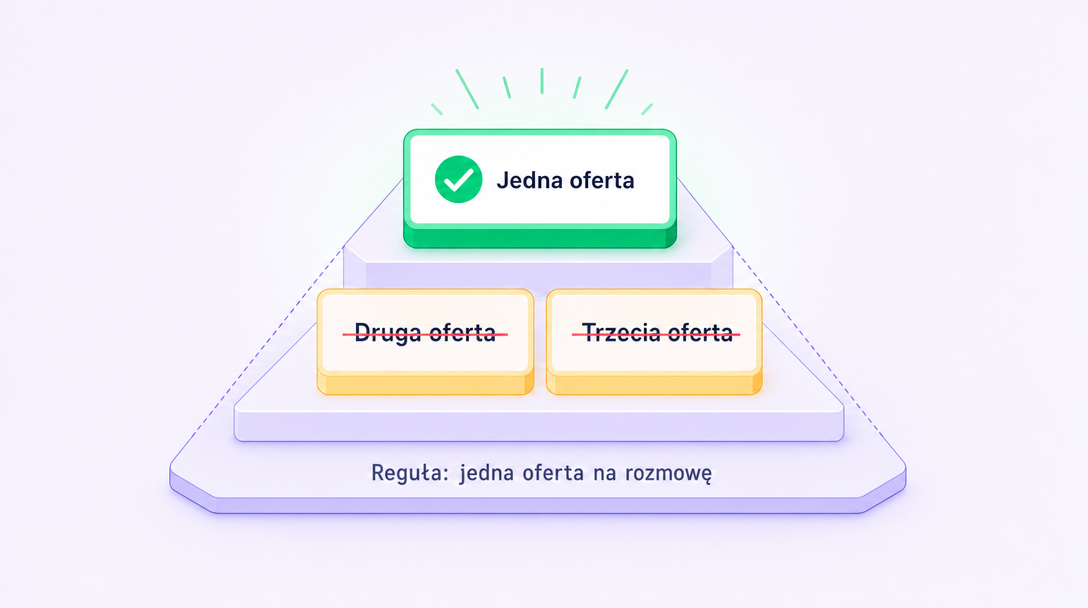
Cross-sell on phone works differently than email or in-cart. Customer can't click through 12 products. Each extra proposal raises cognitive cost to threshold where customer says 'thanks, goodbye'. Threshold is 1 offer. Second = -35% accept rate.
- Cross-sell = Growth+ feature (not in Starter).
- 'One offer per call' = globally frozen, can't disable.
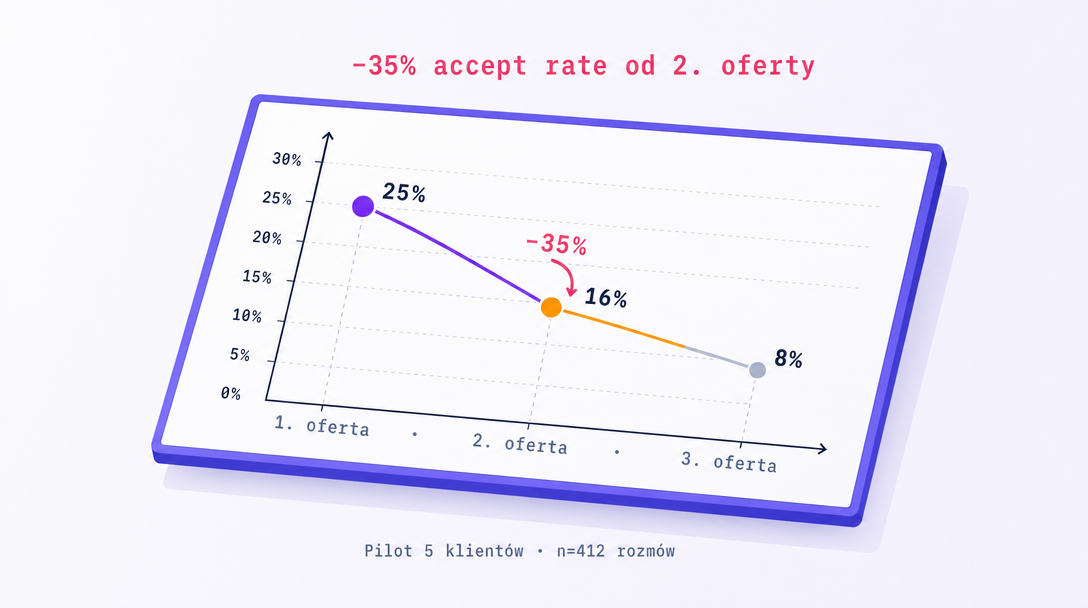
- Second offer: accept rate drops from ~25% to ~16% (-35%).
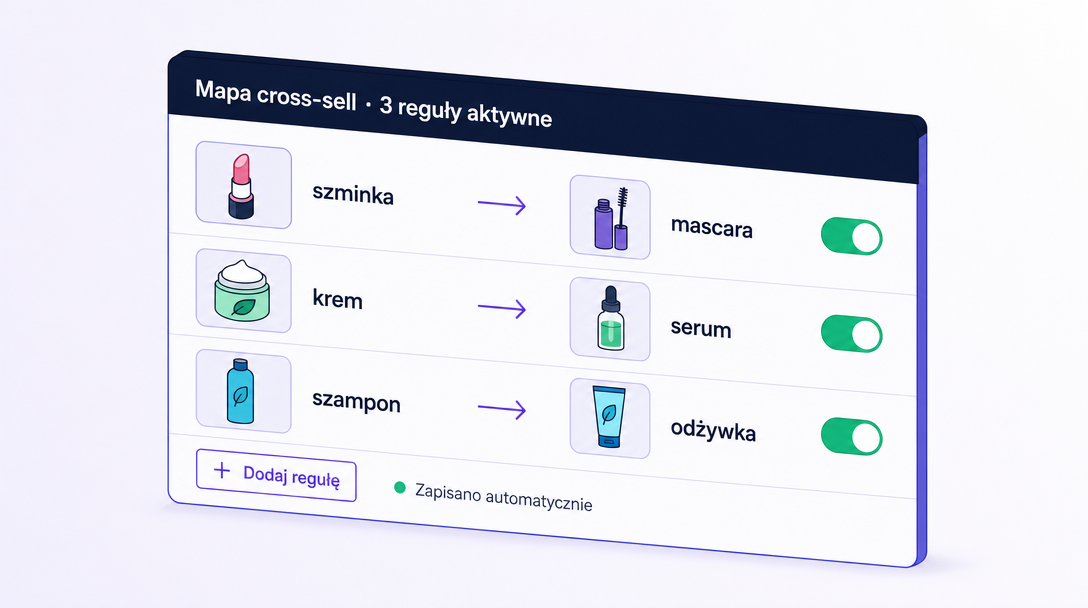
- Cross-sell map configured in panel as table: trigger → offer → accept threshold.
Accept rate cliff: -35% from second offer
Measurement on 412 calls from 5 pilots (beauty, supplements, fashion, home, electronics). Controlled A/B compared: script with 1 offer vs 2 offers vs 3 offers.
Result is unambiguous: accept rate for first offer: ~25%. Second (if customer accepts first): ~16%. Third: ~8%. Drop between 1st and 2nd = -35% (relative). Between 2nd and 3rd: another -50%. The chart is a cliff, not a curve.
More important: total revenue from 2 offers isn't bigger than from 1 offer. Reason: with 2 offers, average call time grows by 18s. In that time, ~12% of customers cancel the whole order. Lost order > gained second offer.
'One offer per call' — product rule, not configuration
You won't find a 'propose 2 offers' checkbox in the CallBotAgent panel. Conscious product decision based on data. Three times in the first year pilot customers asked for this option. Three times we declined and showed data. All three agreed after analysis.
You can decide which offer (cross-sell map). You can decide whether to propose at all (toggle ON/OFF per category). You can't propose two in a row.
Cross-sell map: trigger → offer → threshold
Cross-selling (Growth+) in panel: each row is one trigger product (what customer ordered) + suggested product (what AI proposes) + accept threshold (below which AI skips even with strong trust signals).
Best-performing rules from pilots: cross-sell must be complementary, not substitutive (lipstick → mascara, not different lipstick). Offered product price < trigger price (customer doesn't grow cart by more than x1.5).
Plan Scale+ adds per-product rules (Growth has per-category). In Scale you can have 'for this specific lipstick suggest mascara X', in Growth — 'for all lipsticks from category, suggest from mascara base'.
Accept rate varies across industries
5 pilots showed clear differences. Beauty: highest cross-sell accept rate ~32% (lipstick buyers eagerly take matching mascara). Supplements: ~22% (warning: cross-sell has strict legal map — see Wellness legal).
Fashion: ~18% (cross-sell mainly for accessories, not extra clothes). Home + electronics: ~12% (lowest ROI — accept rate low + complementary products usually expensive).
Four things to remember
One offer = product rule, not preference. Second offer = -35% accept rate. Data from 5 pilots, not opinion.
Cross-sell = complementary, not substitutive. Lipstick → mascara, not another lipstick. Offer price < trigger price.
Accept rate varies 3× across industries. Beauty 32% vs Home 12%. Adjust map and expectations per category.
Plan Scale+ = per-product rules. Growth has per-category. Scale gives granularity per specific product.
Cross-sell on calls?Test on your products (Growth+).
1,000 trial credits (~20 confirmation calls) · full access to your chosen plan · cancel anytime. Card required · no charge during trial · auto-activates on day 8.